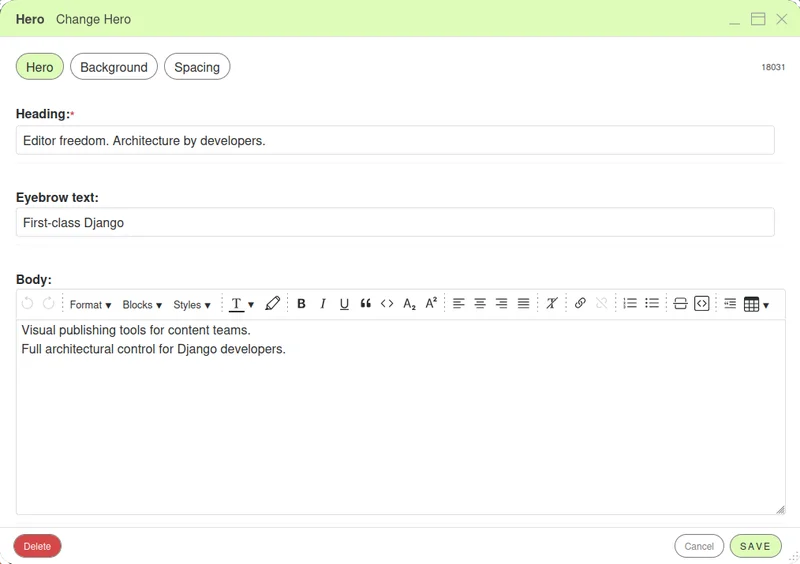
Editor freedom. Architecture by developers.
Visual editing and publishing tools for content teams.
Full architectural control for Django developers.
Faster onboarding
django CMS builds on the Django concepts your team already knows
Content plugins build on Django concepts you already know:
Django models store content
Their admins provide forms for frontend editing
Still, django CMS' frontend editor allows editors to easily work on content in the frontend without having to go into the admin.
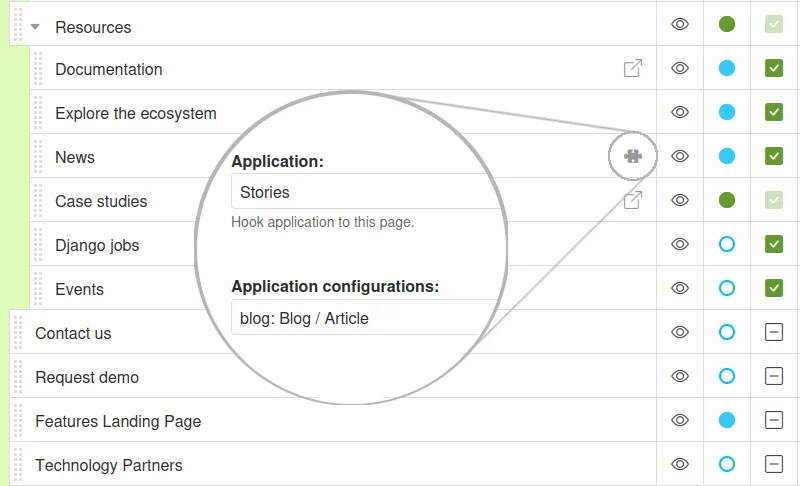
django CMS works nicely with your custom Django apps.
With a few lines of code you can turn them into app hooks that editors can place anywhere in the page tree.
Or you just keep them in your project's urls.py and serve them just as you would without django CMS.
Editorial freedom
Editors move independently
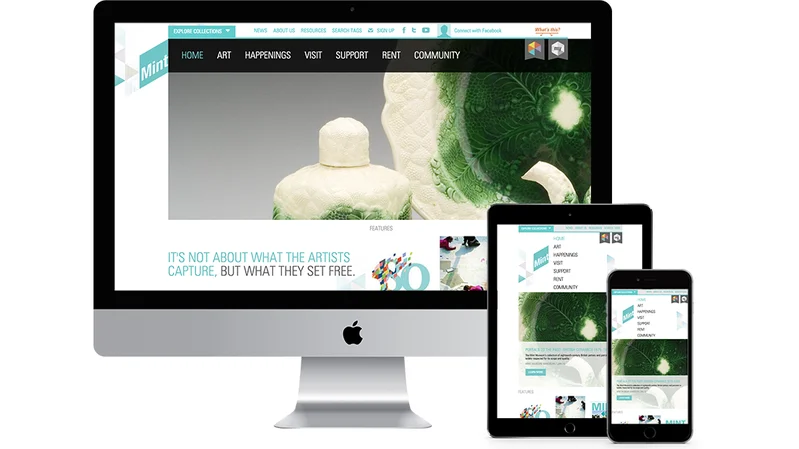
django CMS gives editorial teams the freedom to create, update, and manage content visually while developers retain control over applications, frontend systems, and publishing architecture.
Editors work in context instead of navigating disconnected admin forms. They can iterate faster, make fewer mistakes, and collaborate more easily.
Developers define reusable content plugins and layouts that editors can assemble visually.
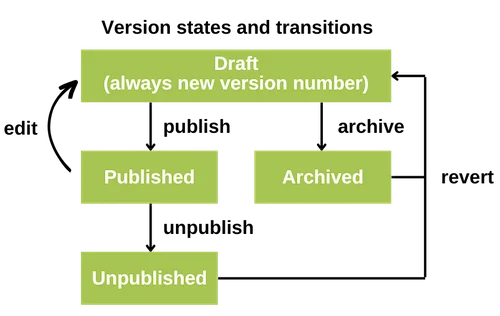
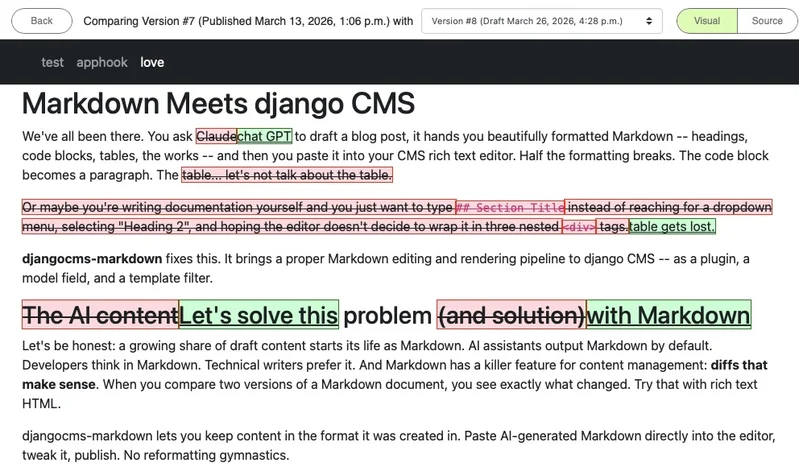
Editorial teams can review, compare, approve, and publish changes with full visibility into content history, and adjust the processes to their needs.
Chose your architecture
Traditional Django
Define base templates for your pages including placeholders where editors can fill in content.
django CMS renders them lightning fast using its proven caching strategies.
Hybrid
With djangocms-rest add a REST API on top of the existing template-based rendering.
Serve web pages as HTML and provide the same content to apps or other consumers through the API.
Headless
Your fully headless setup removes the page templates and serves the content through REST endpoints to external consumers.
Easily adjust your frontends to keep the frontend editing capabilities for the convenience of your editors.
Standing on shoulders
Ecosystem built for publishing operations
djangocms-versioning provides complete version tracking for published content, giving teams a full history of changes, comparisons between revisions, rollback capabilities, and auditability across editorial workflows.
djangocms-versioning allows editors and developers to compare content versions, track changes over time, and confidently manage revisions across collaborative publishing workflows.
djangocms-moderation enables custom publishing workflows by allowing teams to define role-based review, approval, and publishing processes that match their editorial and organizational requirements.
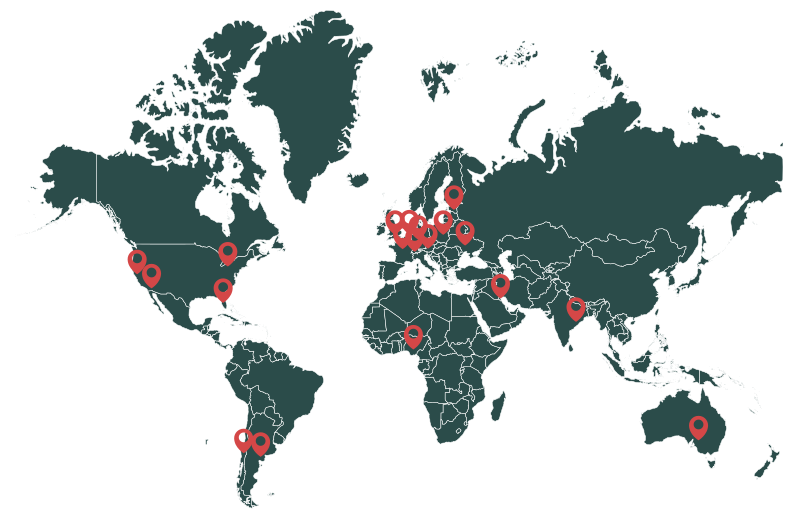
Language-aware URLs, localized content management, and integration with Django’s internationalization framework help teams scale global publishing operations without introducing a separate localization system.
Teams can manage multiple brands, regional sites, campaigns, or business units while reusing shared Django applications, authentication systems, and content components.