django CMS vs. Typo 3, Joomla, WordPress, Mezzanine, Drupal, Wagtail CMS comparison: Which is the best CMS platform
In this article, we will show you an in-depth CMS comparison of the best platforms out there.

There has been a growing need to update websites faster to keep content fresh and use content management systems (CMS). These offer a flexible, back-end interface for users to edit, modify, and publish content on a website. CMS has played an essential role in updating the content of websites, and with the growing variety of content management systems, there are a few things you should know when choosing a CMS and getting started. In this article, we will show you an in-depth CMS comparison of the best platforms out there.
django CMS vs. other CMS comparison
In the following table, we compare some of the most popular content management systems against django CMS to see who scores the best.
| django CMS | Drupal | Joomla | Typo 3 | Wagtail | Wordpress | Mezzazine | |
|---|---|---|---|---|---|---|---|
| License | Open Source | Open Source | Open Source | Open Source | Open Source | Open Source | Open Source |
| Release year | 2007 | 2000 | 2005 | 1998 | 2014 | 2003 | 2012 |
| Security | High | High | Low | Moderate | High | Moderate | - |
| Programming language | Python | PHP | PHP | PHP | Python | PHP | Python |
| New releases | unavailable | Every 6 months | Every 6 months | Fixed release cycles | Every 2 months | Every 4 weeks | unavailable |
| Supported databases | MySQL, PostgreSQL | MySQL, PostgreSQL | MySQL, PostgreSQL,SQL Server | MySQL, PostgreSQL, SQLite | MySQL, PostgreSQL, SQLite | MySQL | MySQL |
| Devices supported | Mobile / Desktop | Mobile / Desktop | Mobile / Desktop | Mobile / Desktop | Mobile / Desktop | Mobile / Desktop | Mobile / Desktop |
| Commercial Support | Yes | Yes | Yes | Yes | Yes | Yes | - |
| Developer Community | Yes | Yes | Yes | Yes | Yes | Yes | Yes |
| Developer Certification | No | Yes | Yes | Yes | Yes | No | Yes |
| Documentation support | Yes | Yes | Yes | Yes | Yes | Yes | Yes |
| Multilingual functionality | Yes | Yes | Yes | Yes | Yes | Only with Plugins | Yes |
| CMS Features | Drag & Drop Content Image Resizing Multiple Upload Simple editing Unique data validation Custom user permission | Extensible User Profiles Interface Localization | Image resizing Drag and Drop Content Multiple Upload Template Language | Image Resizing Multiple Upload Spellchecker Style Wizard Template Language Interface Localization | Simple editing Content economy Image Resizing Multiple image upload Easy configuration | Drag & Drop Content Image Resizing Multiple Upload Interface Localization | Drag & Drop Content Scheduled publishing Ready-to-use themes Out-of-the-box Django internationalization Embedded integration Rich API |
| Market share in % | unavailable | 3.40% | 5.20% | 1.20% | unavailable | 60.4% | 0.01% |
Who uses which CMS platform
WordPress
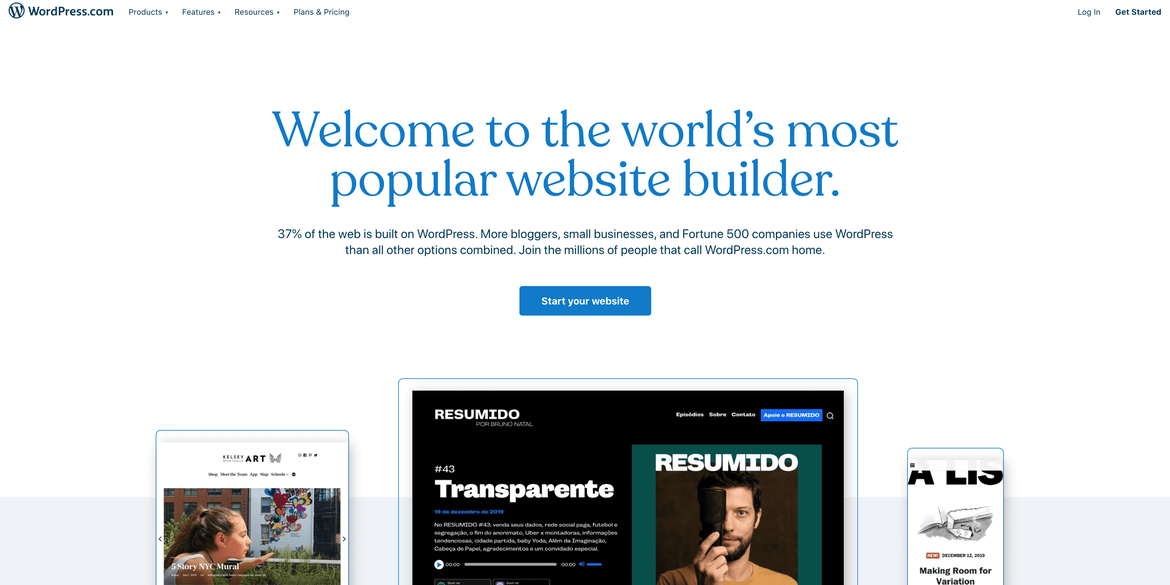
WordPress is one of the most popular open-source CMS platforms. It initially launched as a blogging platform with an emphasis on editorial features like article and blog publishing. Due to the platform's simple interface and an extensive amount of website themes, it might be useful for smaller businesses or ones that have less experience with design.
Advantages:
- Doesn’t require programming knowledge
- Wide range of plugins and large community
- WordPress offers free and paid templates according to your websites needs
- Allows you to add labels and categories
Companies using WordPress: BBC America, TechCrunch, and Sony
Read our in-depth guide on django CMS vs. WordPress
Drupal

Drupal is another open-source CMS option targeted to a vast pool of developers, marketers, and agencies. It allows its users to create a site from a template or entirely from scratch. Drupal has similar features as WordPress but is more suited for users who have experience with coding and web development.
Advantages:
- Enables Drupal developers to deploy core features and functionality rapidly
- Allows developers to develop custom modules using well-documented API
- High flexibility when displaying SEO-friendly content
- Mobile-friendly Content management system
Companies using Drupal: eBay, Twitter, and Tesla
Joomla

Joomla is considered one of the most popular CMS solutions for programmers; it has a large and active developer community and is a developer-centered CMS. Joomla enables developers to create a custom operating website and offers brands to launch and market content internationally. Due to the higher degree of complexity than WordPress and the security issues, it's not recommended for beginners.
Advantages:
- Offers advanced user management options
- Easy to install
- More than 8000 extensions
- Includes multilingual support functionality
Brands using Joomla: Nintendo Nordic and General Electric Russia
Wagtail

Wagtail is an open-source solution that offers a flexible way of writing content. It provides the user with a powerful way of creating content with a set of building blocks to stack and order different layout types. Similar to django CMS, it also uses the Django framework and focuses on flexibility and user experience.
Advantages:
- Easy to add new parts
- Big community of experienced developers ensuring further development and improvement
- Resource-efficient, no need for big servers
- Supports Multilingual websites
- Integrated support of A/B testing
Companies that trust Wagtail: Google, Microsoft, NHS, and BMW
Typo3
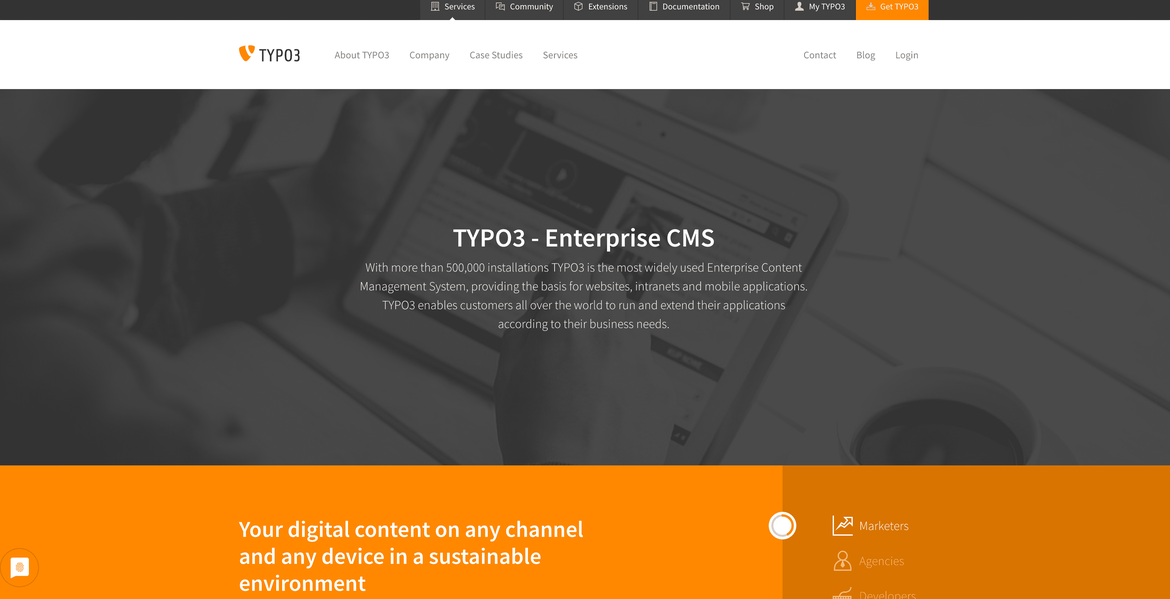
Typo3 is the oldest CMS in this comparison and provides you with a platform to create enterprise websites and smaller websites with a wide range of extensions. Users will benefit from an active and helpful community. Typo3 also runs an internal language called TypoScript, which allows users to build additional elements, including dynamic content.
Advantages:
- Easy usability
- Suitable for websites with multiple languages
- Big and supportive user community
- Used in many universities and science institutions
- Long term support versions ensure continuous safety updates
Companies using Typo3: Pearson, MSD and Mercedes Benz
Mezzazine

Mezzanine is a consistent and flexible content management platform. Built using the Django framework, Mezzanine provides a simple yet highly extensible architecture that encourages diving in and hacking on the code. Mezzanine is BSD licensed and supported by a diverse and active community. Unlike many other platforms that make extensive use of modules or reusable applications, Mezzanine provides most of its functionality by default. This approach yields a more integrated and efficient platform.
Advantages:
- It resembles CMS frameworks such as WordPress
- Intuitive interface
- Free themes and premium theme marketplace
- Translated into over 35 languages
- Seamless integration with third-party Django apps
django CMS

django CMS is a user-friendly option for developers looking for a lightweight core, easily integrated with other software. The very intuitive drag and drop interface makes it easy to use for content managers, content editors, and website administrators. It's built around the needs of multilingual publishing by default. All websites, pages, and content can exist in multiple language versions.
Advantages:
- Easy to extend
- Simple organization of documents
- Custom web application can easily be integrated
- Built to support multi-language environments
- Easy drag and drop editing function
- Very secure and reliable
Companies using django CMS: NASA, AAMC and L’oreal
Choosing the Right CMS
When it comes to choosing a CMS, you need to do some solid research to ensure you pick the CMS for your company's needs. Brands that produce a lot of multimedia projects might want to choose a CMS that provides a highly visual theme. On the other hand, if your company focuses on sales, you might want to consider a CMS that can help you develop a secure website with a plugin feature related to E-Commerce. For others, the market share might be an important factor for the right decision.
The above mentioned CMS platforms are useful in many ways. However, when it comes to choosing the best CMS for your business goal, you have to look at various aspects presented in this CMS comparison.
Further Reading
Are you interested in reading more about django CMS features? Become a member of the django CMS association and learn more about the benefits the content management system has to offer for your projects.

Mario Colombo
President django CMS Association